

Speech Therapy
Where Speech Meets the Brain: A New Standard of Care
Most people think of speech therapy as “mouth exercises”—practicing sounds, blowing bubbles, or moving the tongue.
At Maive Brain, we know that speech is far more than a motor skill; it is the ultimate output of a regulated, connected brain.
If the brain’s “wiring” is disorganized or the nervous system is stuck in a state of stress, focusing on the mouth is like trying to fix a computer monitor when the processor is unplugged. We specialize in the Neuro-Developmental Approach to communication—strengthening the foundational pathways that allow language to emerge naturally.
Beyond the Mouth: Why Our Neuro-Informed Speech Therapy is Different
Speech Therapy is beyond tongues, teeth, and vocal cords. While those are the “tools” of speech, the commander of speech is the brain. Traditional speech therapy often focuses on repetitive drills and “say it again” prompts.
We take a different path. We don’t just “do” speech therapy; we target the neurological foundations that allow speech to emerge naturally. We focus on the areas of the brain connected to emotional regulation, motor planning, and social connection.
1. Speech is a "Top-Down" Process
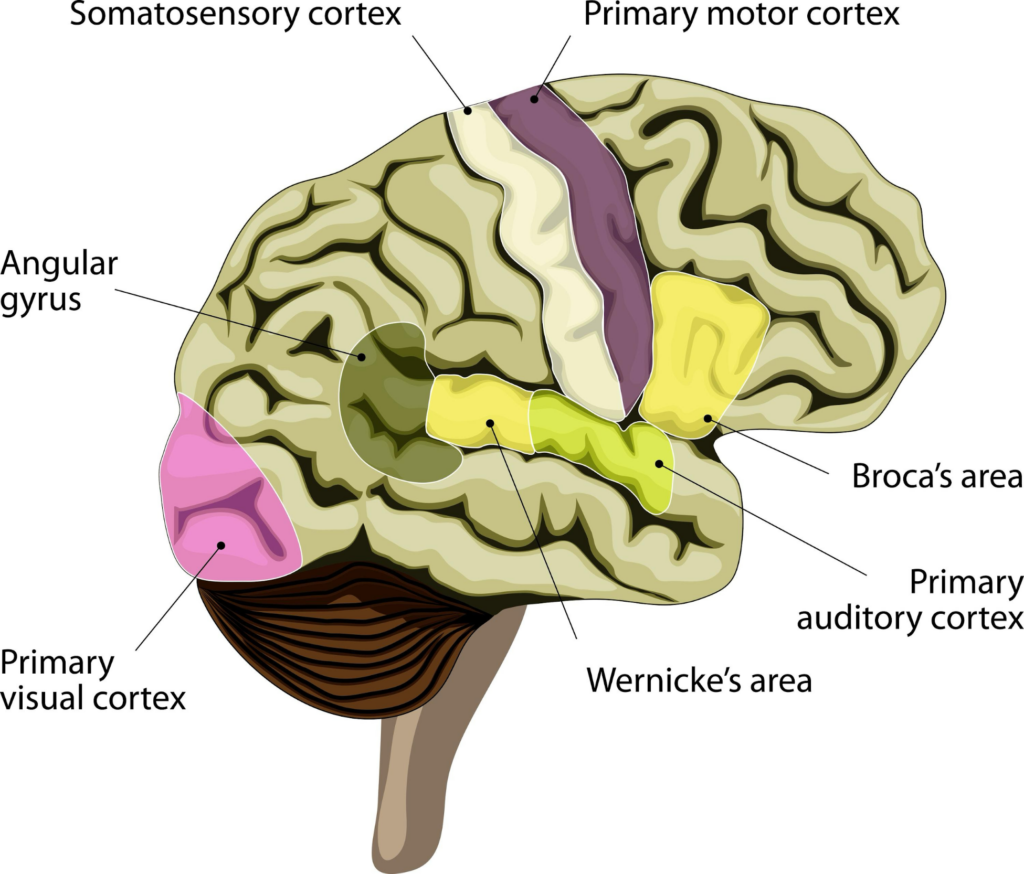
Speech is one of the most complex tasks the human brain performs. It requires the perfect synchronization of the Broca’s Area (production) and Wernicke’s Area (understanding), all while being fueled by the Limbic System (emotions). If a child is anxious, overstimulated, or neurologically "disconnected," the brain's priority is survival—not speech. We don't force words out of a stressed brain. We regulate the brain so that speech has the space to happen.
2. Targeting the "Social Brain"
Communication is a social act. We focus on the Right Hemisphere of the brain, which processes tone of voice, facial expressions, and "the big picture." By strengthening these connections, we help children move beyond rote labeling to true, meaningful communication.
3. Motor Planning vs. Muscle Strength
Many speech delays aren't about "weak muscles"—they are about Praxis (the brain's ability to plan and execute a movement). We use neuro-informed strategies to help the brain map out the complex "roadway" from a thought to a spoken word.
A Parent’s Guide: How Your Child’s Brain Finds Its Voice
The "Communication Bridge"
Think of your child’s brain as having two islands. One island has all their thoughts and feelings. The other island has their speech and words. In between is a bridge.
- Traditional Therapy often stands on the “Words Island” and shouts for the child to come over.
- Our Neuro-Informed Therapy goes under the bridge to see if the supports are stable. Is the bridge shaky because of sensory overwhelm? Is the bridge closed because of emotional stress?
Why "Force" Doesn't Work
The brain has a “safety switch.” When a child feels pressured to speak, their Amygdala (the brain’s alarm) can flip that switch to “OFF.” This is why a child might speak perfectly at home but “lose their words” in a clinic.
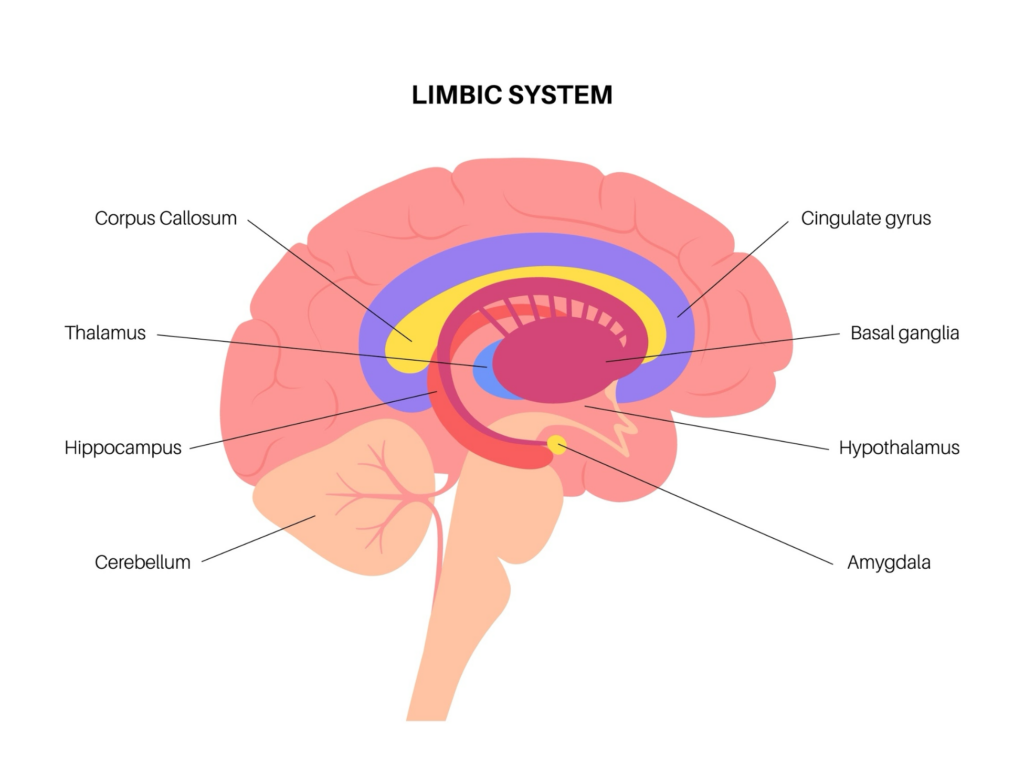
We focus on Co-regulation. When your child feels safe and connected to their therapist, their brain stays in “Learning Mode” rather than “Survival Mode.” Words flow better when the brain is relaxed.
What You Will See in Our Sessions
Because we target the brain, our sessions might look different than what you expect:
- Heavy Work and Movement: We might have your child jump or push a heavy cart before speaking. This “wakes up” the brain’s motor centers.
- Wait Time: We give the brain “processing space.” Sometimes the best thing for a neuro-informed brain is silence, allowing the neural pathways to find the right connection without the stress of a prompt.
- Joy-Based Learning: Dopamine is the “fuel” for neuroplasticity. When a child is having fun, their brain is literally rewiring itself to communicate more effectively.
The Neural Circuitry of Communication
While traditional speech therapy focuses on the peripheral nervous system (the muscles of the mouth and larynx), our approach targets the Central Nervous System (CNS) and the specific white matter tracts that facilitate language.
1. Strengthening the Arcuate Fasciculus
Communication requires a "high-speed internet connection" between the back of the brain (understanding) and the front of the brain (speaking). This connection is a bundle of nerve fibers called the Arcuate Fasciculus.
• The Science: In many neurodivergent children, this "bridge" is under-responsive.
• Our Approach: We use multisensory integration to increase the "bandwidth" of this pathway.
2. Regulating the Vagus Nerve & Social Engagement System
The Vagus Nerve is the 10th cranial nerve and a cornerstone of the "Social Engagement System." It controls the muscles of the face and throat.
• The Science: If a child is in a state of "High Arousal" (Sympathetic nervous system), the Vagus nerve restricts the muscles used for speech and facial expression to focus on survival.
• Our Approach: We utilize Polyvagal Theory to ensure the child is in a "Safe and Social" state. We don't ask for speech until the Vagus nerve is regulated, ensuring the muscles of the larynx and pharynx are neurologically "unlocked" for vocalization.
2. Regulating the Vagus Nerve & Social Engagement System
Learning a new motor skill (like producing a "R" or "S" sound) requires Neuroplasticity. The brain only changes when it is engaged and rewarded by its own internal chemistry.
• The Science: High-stress "drills" release cortisol, which actually inhibits learning and memory.
• Our Approach: We design sessions to trigger Dopamine and Oxytocin. These neurochemicals act as "neural glue," making the new speech pathways permanent and resistant to regression.
The Neural Circuitry of Communication
We know that seeing your child struggle to speak is one of the hardest things a parent can experience. You might wonder if they are “lazy” or “just not trying.” We want you to know: It is not a lack of will; it is a matter of wiring.
The Three Layers of Speech
We work from the bottom up to make sure your child’s “Language Highway” is clear of traffic.
1. The Foundation (Safety): Before we work on words, we check the “Road Conditions.” Is your child’s brain calm? Are they feeling safe? If the road is “icy” with anxiety, we can’t drive the “Speech Truck” over it.
2. The Engine (Processing): This is the middle of the brain. We help the brain process the sounds it hears so it knows how to copy them.
3. The Destination (The Word): This is the very last step. By the time your child says a new word in our clinic, it’s because the whole “Highway” is finally open and clear.
How You Can Help at Home
You don’t need to be a scientist to help your child’s brain grow!
• Follow the Joy: When your child is laughing and playing, their brain is wide open for learning.
• The Power of the Pause: Give your child’s brain 10 seconds to process what you said. Their “Highway” might just have a bit of a traffic jam, and they need time to clear it.
• Be the “Safe Harbor”: When your child is frustrated, your calm voice tells their Amygdala that everything is okay. This “co-regulation” is the best speech therapy in the world.
A Note for You
You are not just a spectator; you are your child’s most important “Neural Partner.” We will teach you how to read your child’s nervous system so you can support their “Brain Bridge” at home.
We aren’t just teaching them to talk; we are helping their brain connect to the world.